Under-sink water filters are an easy and effective way to improve the quality of your home’s water. By filtering out impurities like chlorine, lead, and sediment, these filters can give you and your family a continuous supply of clean, fresh-tasting water for drinking, cooking, and more.
Whether you are concerned about harmful chemicals, or simply want to improve the taste of your tap water, an under-sink water filter is a great investment.
In this article, I’ll take a look at the best under-sink water filtration systems. I’ll also discuss the different types of under-counterwater filters and how they work.
Reasons to Buy an Under-Sink Water Filter
There are many reasons to buy an under-counter water filter, here are just a few:
If your family requires more than 2-3 gallons of filtered water per day, by installing an under-sink water filter, you’ll always have plenty on hand – and you won’t have to lug heavy bottles from the store anymore.
A water filtration system installed under your kitchen sink is a space-saving way to get clean, filtered water without taking up counter space.
Having an under-sink water filter gives you peace of mind knowing that you and your family are always drinking clean, fresh water.
Under-counter water filtration system can also save you money in the long run, as it will extend the life of your appliances and plumbing fixtures by preventing scale buildup.
Overall, an under-sink water filter is a great investment for anyone who wants to improve the quality of their home’s water supply.
Types of Under-Sink Water Filters
Here I’ll discuss the different types of under-sink water filters available on the market today. So, what’s the difference? And which type of filter is right for you?
Single-stage Under-Sink Water Filters
Single-stage filters are a great option for families who want the convenience of filtered water without the hassle of changing filter cartridges. Single-stage under-sink water filters use a carbon block filter to remove impurities from your water. This type of filter is very effective at removing contaminants like chlorine, lead, and bacteria from your water supply.
Multi-stage Under-Sink Water Filters
Multi-stage water filters are typically more expensive than their single-stage counterparts. But they offer a higher level of filtration, removing more impurities from your water.
If you’re concerned about the quality of your tap water, or you want the peace of mind that comes with knowing your water is as pure as possible, a multi-stage under-sink water filter is probably the way to go.
Reverse Osmosis Systems
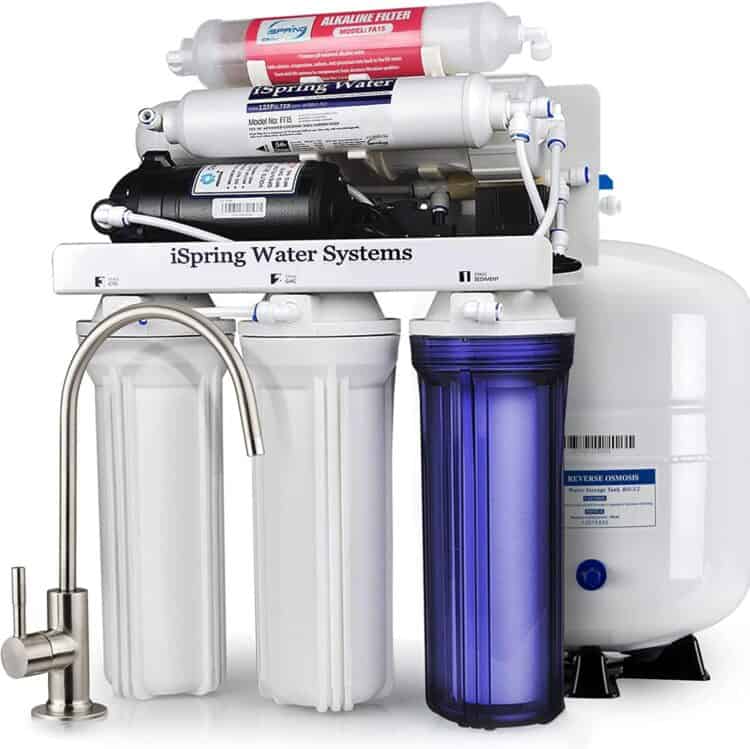
Reverse osmosis is one of the most popular methods of water filtration. A reverse osmosis system consists of a membrane that filters out impurities and a storage tank for filtered water.
Reverse osmosis systems are available in a variety of sizes, from small under-sink units to large industrial systems. The size of the unit will determine the flow rate and the amount of water that can be stored in the tank.
Carbon Filters
Carbon filters are often used in under-sink water filtration systems because they are effective at removing a wide range of contaminants, including chlorine, lead, and sediment. They also do not remove beneficial minerals from water, like some other types of water filters do.
Under-sink carbon filters typically connect to the cold water line and have their own dedicated faucet. This allows you to easily switch between filtered and unfiltered water. Most under-sink carbon filters will need to be replaced every 6 months or so, depending on how much water you use.
Ultrafiltration
An ultrafiltration system is designed to remove contaminants from your water supply, such as bacteria and viruses. The system uses a hollow fiber membrane to filter out impurities, leaving you with clean, fresh-tasting water.
Installing an under-sink ultrafiltration system is a simple process and can be done in just a few minutes. Once the unit is installed, it will require very little maintenance, making it a convenient option for busy homeowners.
No matter which type of water filter you choose, be sure to get one that is certified by the National Sanitation Foundation (NSF).
5 Best Under-Sink Water Filters
#1. Best Overall: iSpring 6-Stage Reverse Osmosis System
No products found.
Filtration Type: Reverse osmosis
Capacity: 75 Gallons
Flow Rate: 1 GPM
Filtered Water to Waste Water Ratio: 1:1.5
Dimensions: 15″L x 8″W x 18″H
This incredible 6-stage RO filtration system is the best way to ensure that your family has access to pure, clean water.
Pros:
With a capacity of 75 gallons, this system will remove 1,000+ contaminants including lead, fluoride, chlorine, arsenic, and more. Providing peace of mind and great-tasting water for cooking, and drinking.
The electric pump included in the iSpring Reverse Osmosis System increases water pressure, making the system more powerful and efficient. This is a significant benefit, as reverse osmosis systems can sometimes have issues with water pressure. The pump ensures that your filter will work properly and efficiently.
The System comes complete with a brass faucet and filter cartridges with RO membrane, so you can install it and start using it right away. The sleek design of the brass faucet will add a touch of style to your kitchen sink.
The alkaline remineralization filter not only purifies your water but also adds back natural minerals that are beneficial to your health.
The filters need to be replaced every six months to a year, making it easy to maintain. The system has a low 1:1.5 ratio of filtered to wasted gallons.
This easy-to-install system will provide your family with filtered water for years to come.
Cons:
A bit pricey
#2. Best With Faucet Installation: Aquasana 2-Stage Under Sink Water Filter System
No products found.
Filtration Type: Carbon filtration
Capacity: 500 Gallons
Flow Rate: 0.5 GPM
Dimensions: 8.25″L x 4.25″W x 9″H
Pros:
This system removes 77 different contaminants from your water, including mercury, lead, chloramines, and chlorine. With three different faucet finishes to choose from, this under-counter water filter will match any kitchen decor.
It has a filtration capacity of 500 gallons of clean, filtered water before needing to be replaced.
The system uses carbon filtration to remove contaminants from your water, leaving you with clean, safe water.
This two-stage filter does not waste water because no RO membrane is used in the filtration process. The filter can last up to six months.
Cons:
The flow rate is not that impressive
#3. Best for Alkaline Water: APEC Water Systems ROES-PH75
No products found.
Filtration Type: Reverse Osmosis, Alkaline
Capacity: 75 Gallons
Flow Rate: 75 GPD
Dimensions: 16″L x 5.25″W x 17.5″H
Enjoy the benefits of alkaline water with APEC under-sink water filter system. This six-stage filtration systemremoves sediment and carbon for a cleaner, healthier drinking experience. Alkaline water has many benefits, including improved hydration, better absorption of nutrients, and reduced acidity in the body.
Pros:
This top-of-the-line filtration system eliminates over 1,000 contaminants, including chlorine and heavy metals. You’ll love the difference in taste and quality of your water.
Superior Reverse osmosis technology that filters up to 50,000 gallons of water. Plus, it saves water by wasting significantly less during the filtering process than traditional systems.
The APEC under-sink water filter system is WQA certified, meaning that it has been tested and approved by the Water Quality Association. This certification gives you the peace of mind knowing that your water is safe to drink.
It comes with a lead-free designer faucet, making it a budget-friendly and chic addition to your home. The faucet is also easy to install, so you can enjoy filtered water in no time.
The two year extended warranty protects you in case of any problems with the system.
Cons:
It takes a bit more space than comparable systems
#4. Best Budget: Waterdrop 15UA Under Sink Water Filter System
No products found.
Filtration Type: Carbon filtration
Capacity: 16,000 Gallons
Flow Rate: 0.75 GPM
Dimensions: 3.6″L x 3.6″W x 16.7″H
The Waterdrop under-sink water filter is the best budget option for those looking for a compact design that is easy to install. With push-to-connect fittings, it is a great choice for anyone on a tight budget.
Pros:
With the Waterdrop under-counter water filter, you can rest assured that lead, chlorine, heavy metals, and chemicals will be reduced for improved purity. Plus, sediment won’t stand a chance against this top-of-the-line filtration system.
With a service life of 24 months or 16,000 gallons, you can be confident that your family will have access to clean water for a long time.
Whether you want clean drinking water at home, or on the go in your RV, this under-sink water filter can give you the peace of mind that your water is free of contaminants. Plus, installation is a breeze, so you can be up and running in no time.
#5. Best Tankless: Waterdrop G3 Reverse Osmosis System
No products found.
Filtration Type: Reverse Osmosis, Carbon Block
Capacity: 400 Gallons
Flow Rate: 400 GPD
Filtered Water to Waste Water Ratio: 1:1
Dimensions: 18.12″L x 5.67″W x 17.72″H
This tankless reverse osmosis system provides an endless supply of clean water for your home or office. With a flow rate of 400 gallons per day, you’ll never have to worry about running out of clean drinking water again.
Pros:
The System uses a multi-stage filtration process to remove impurities from your water. A carbon block filter removes large particles, while an activated carbon block filters out smaller impurities. The RO membrane then removes even the smallest contaminants, leaving you with clean, fresh-tasting water
It comes with a water pump that provides increased water pressure while reducing water waste.
The system also comes with a built-in leak detector and faucet, so you can be sure that no water is wasted.
It features an indicator light that works as a reminder to replace the filter. This is a great feature because it ensures that you always have clean, filtered water.
Cons:
More expensive than other counterparts
Under Sink Water Filtration System – Buying Guide
Here’s a quick guide to help you choose the best under-sink water filter for your needs:
Unit Size and Kitchen Space
The first thing you need to do is measure the space under your sink. You will need to know the dimensions of the area so that you can purchase a filter that will fit properly.
Faucet Attachment
If your kitchen sink doesn’t have a pre-fabricated hole to attach the extra faucet that comes with most under-sink filters, then you’ll need to drill one. This can be a difficult and time-consuming task, so it’s important to consider all your options before buying an under-sink water filter.
A pre-drilled hole for your filter can make installation a breeze, and it’s worth considering if you want to avoid any potential headaches down the road.
Water Flow Rate
The flow rate is the measure of how much water can be filtered in a given period of time. For example, a filter with a flow rate of 0.5 gallons per minute can filter 30 gallons of water in one hour.
It is important to choose an under-sink water filter with a flow rate that meets your needs. If you have a large family, you will need a unit with a higher flow rate. Conversely, if you live alone or have a small family, you can save money by choosing a unit with a lower flow rate.
Installation
Under-sink water filters that use the main faucet as their water source are easy to install. The directions are typically easy to follow and the installation process is quick.
However, additional tubing and fittings are needed for the reverse osmosis filter which can add complexity to the installation. And if your under-sink cabinet space is limited, it may be difficult to find a place to put the extra equipment.
Under Counter Water Filters – FAQs
How do I choose an under-sink water filter?
There are a few things to consider when choosing an under-sink water filter:
First, you need to decide what type of contaminants you want to remove from your water.
Second, you need to consider the flow rate of the filter. The flow rate is the amount of water that can be filtered per minute.
Third, consider the size of the unit and the under-counter space you have.
Finally, you need to consider the price of the filter and the ease of installation of the replacement filters.
Which water filter removes the most contaminants?
Reverse osmosis (RO) process is the most effective way of removing a variety of different contaminants from water. And even better if RO is combined with the carbon water filtration process.
How often should I change my under-sink filter?
Under-sink water filters typically last for about 6 months before they need to be replaced. However, this can vary depending on the specific model and the level of water contamination. Some filters may need to be replaced more frequently, while others may last up to a year or more. It is important to consult your filter’s manufacturer for specific recommendations on replacement intervals.
How long do under-sink water filtration systems last?
Your under-sink water filter should last many years, as long as you remember to change the filter on a timely basis. If you forget to change the filter, there is a risk of contaminant buildup, which can reduce the lifespan of your under-counter water filter.
Do under-sink filters wastewater?
Conventional under-sink filters do not waste water, but reverse osmosis (RO) filters do.Reverse osmosis filters work by forcing water through a semipermeable membrane. The membrane only allows water molecules to pass through, not impurities. This process requires a lot of water pressure, and as a result, some water is lost in the filtration process.